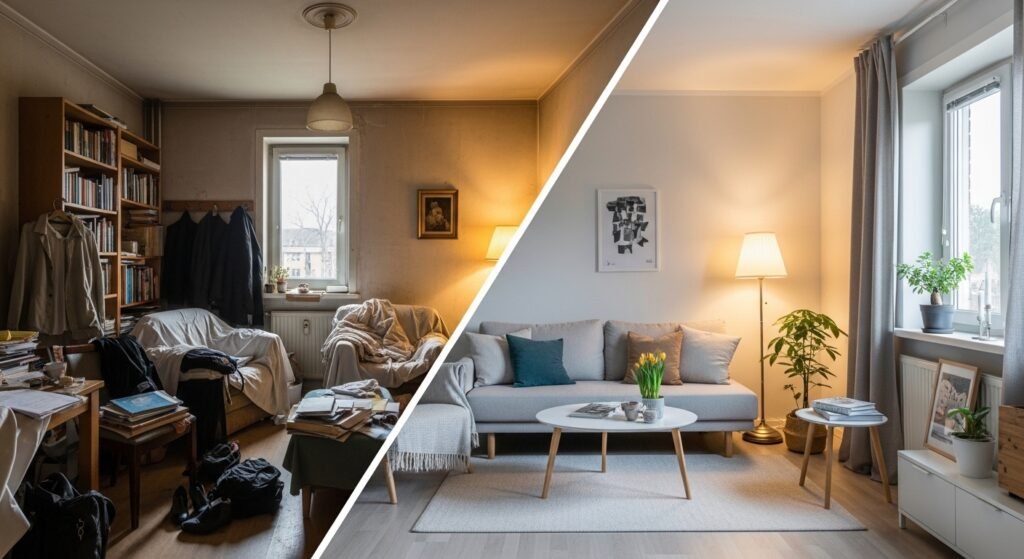
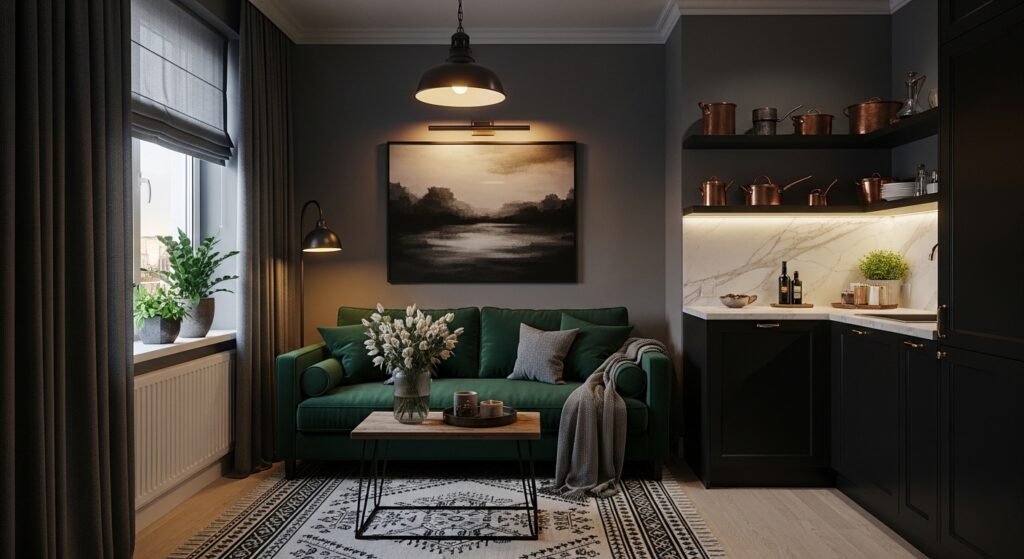
If you’ve ever gazed around a small bedroom,a slender hallway, or limited-size kitchen wishing the place could feel less like a box, know you are not by yourself. For years — many decades, to be precise — we have all been taught the same: paint it white, use bright colours and make the appearance of more open area.
These days, however, interior designers,home stylist’s and daring people are breaking all of the “rules” of how to properly decorate your home. In addition to using bright colours; other colours as navy blue, dark green,Charcoal black,mud brown, dark red – which would have originally been used only in large houses – are being used successfully in the smallest areas of homes like bathrooms, hallways, kitchens and anywhere else where you need to make something very small feel larger.
Who would have thought that using a dark painted wall in a small space could lead to such amazing results?
This article will explain the psychology and principles of design when adding an accent wall to a small space along with much additional information on how to accomplish this look(PDF) with examples that can be adapted to create fabulous tiny kitchens.
The “Light Colors Only” Myth — Why It’s Not the Whole Truth
For years, the interior design world has been conditioned to think that using light colours in small rooms is required. There is logic to this belief because lighter colours reflect light, so shadows are minimised and make it more difficult to see the borders of the room.
However, by using light coloured walls, the designer has compromised the actual feeling of the room in favour of the illusion that it is larger than it actual is. The ultimate example of this is the all white kitchen. No matter what colour the cabinets, counters or appliances are — the space is still a small enclosed room.
When you enter a completely white kitchen, it feels sterile, all of the walls appear to be exposed and there is little or no draw to the centre of the room. You are presented with a small, confined area and very clearly understand that you are in a small confined area.
According to the Wornick Development Group, dark colours do not minimize the dimensions of a room; rather, they make it more difficult for your eyes to perceive the borders of the room. The human eye stops searching for the end of the walls and starts appreciating the character of the room.
On the other hand, dark colours visually soften the appearance of the walls by making them visually recede into the room. The human eye focuses on the light sources, furniture and objects instead of the boundaries. This creates more of an intimate atmosphere with greater depth — both of which are valuable in small rooms!
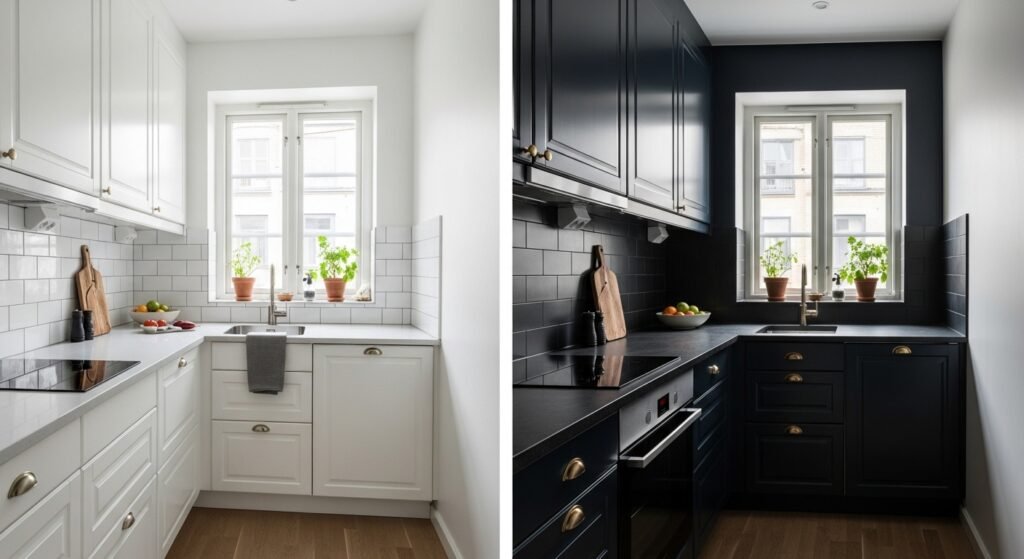
The Psychology of Dark Colors in Small Spaces
The colors of space influence how people feel about the space in which they live. Dark colours, such as rich deep greens, navy blue, charcoal grey, and burgundy red evoke emotions associated with depth, warmth, safety, and opulence. All of these attributes are desirable qualities for creating a small room feel the way you would like your home to be, rather than just a closet. The right dark colour applied to a small room will help create a feel like a jewel box and not like a closet.
Some of the most famous hotels and boutique restaurants in the world are very compact in size and utilise many different deep colours. The depth of the colours creates an intimate environment, creating a memorable experience. You may apply the same element to your home and your kitchen by respecting the true nature of the small area you are looking to accomplish. An intimate, small area is what should make your house feel like home.
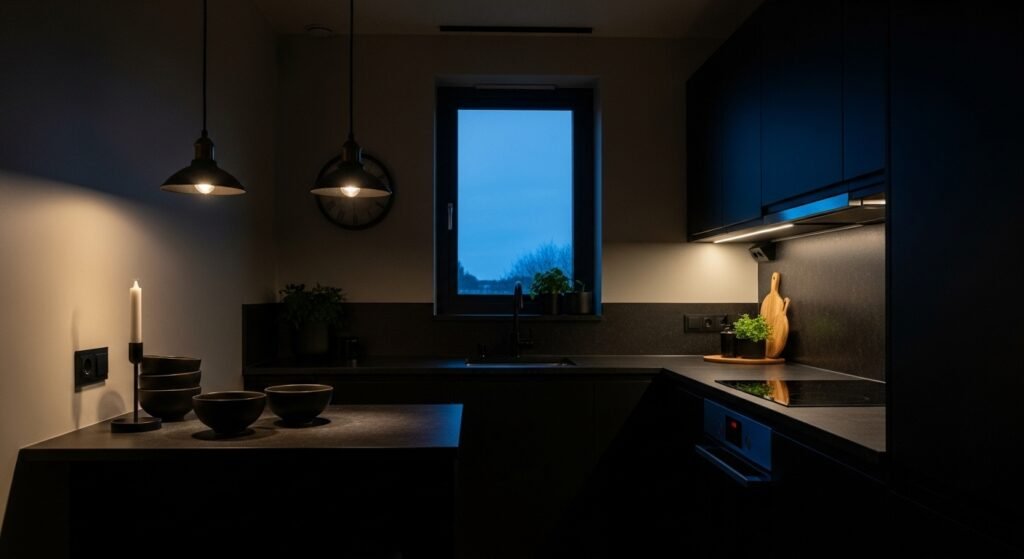
Designer Tip: To use dark colours effectively in your home, you need to control the light sources in the room. Use warm-toned pendant lighting, under-cabinets LED lighting, and candlelight to provide contrast and create visual diversity in the room, where possible.
When Dark Colors Actually Work in a Small Room
There are many factors that determine if a small room can use a dark color scheme, not all tiny spaces will make for good candidates to try this color scheme. Here’s some examples of how dark colors can bring out the best in small spaces:
1. When there is no natural light available: A north facing room will not be bright no matter what colour paint used, therefore a dark room using a dark palette will follow and enhance the room’s natural light nature without fighting it.
2. When you are looking to create a warm and inviting environment: Pocadodges or even bathrooms and reading rooms are the best to bring a feeling of comfort and enclosure will benefit from dark colours.
3. When there are strong artificial sources of light present: Pendant lamps, wall sconces, under-cabinet lights and candles will pop dramatically off of a dark wall thereby adding multiple layers of warmth and visual interest.
4. When there are good architectural elements present in the room: If the wall has beautiful details such as crown moulding, wainscoting, beadboard panels or subway tiles using a dark paint will look very elegant and expertly designed instantly.
5. When the flooring is light or medium toned: Using walls loaded with a deep color combined with a light wood or white ceramic tile flooring creates a stunning contrast together while grounding your space rather than collapsing visually.
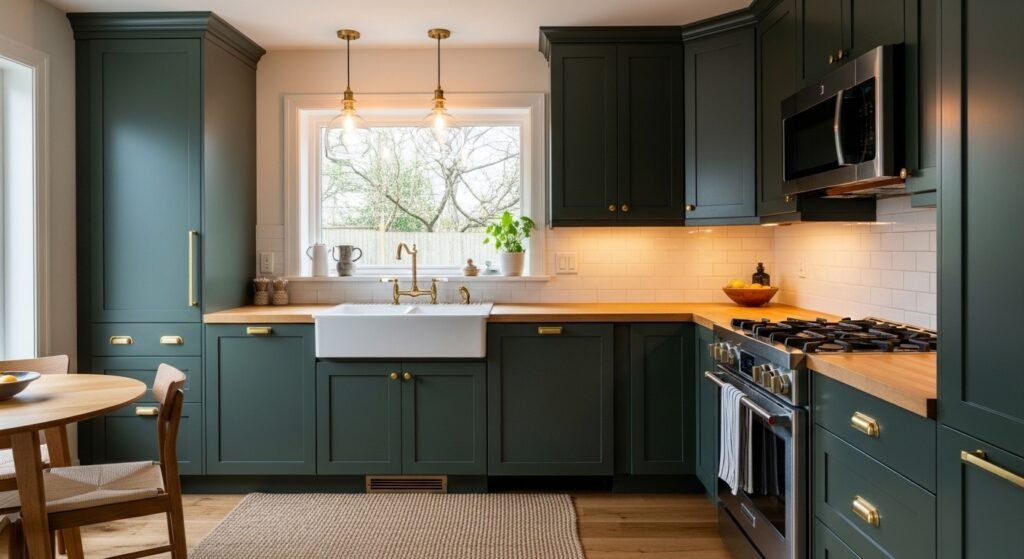
Tiny Kitchen Ideas: Using Dark Colors to Your Advantage
The kitchen is one of the most exciting spaces to experiment with dark color. Because kitchens have so many functional elements — cabinets, countertops, backsplashes, hardware, appliances, open shelving — there are multiple ways to introduce dark tones without committing to a single all-over shade. Here are some of the best tiny kitchen ideas that use dark color with great success:
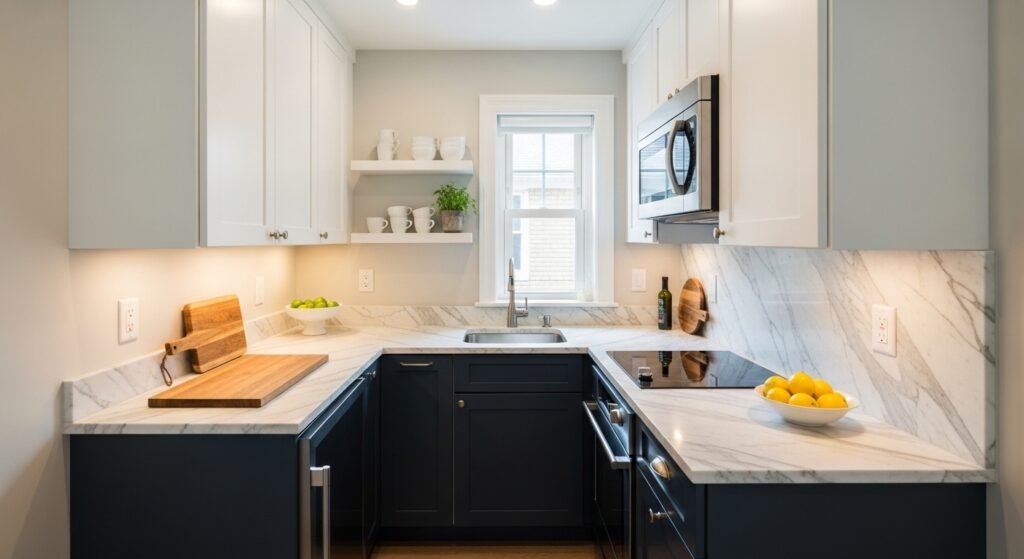
1. Dark Lower Cabinets, Light Upper Cabinets
The current trend in small kitchen designs is to create two-tone cabinets by painting only the lower cabinets in a deep color (like charcoal, dark green, or navy) and keeping the upper cabinets light-colored (white or light cream) in order to ground the space visually without having any extra height added by shortening the distance from ground to ceiling. It creates a downward visual flow to the space; thus, it gives a sense of airiness and stability while adding interest because there is contrast between the two colors used on each set of cabinets.
To achieve a high-end designer look, consider using hardware made of either brass or matte black. In fact, even a seven- or eight-foot-long galley-type kitchen can have a high-end designer appearance by using these two ingeniously simple techniques!
2. Dark Walls with a Contrasting White or Light-Colored Ceiling
One of the most creative ways to make your small kitchen appear larger and more inviting is to paint the walls a dark, moody color, but leave the ceiling white. The white ceiling will create an impression of having an upward-moving wall, which makes the room feel larger than it normally would. The dark walls will create a feeling of warmth and richness as they surround the room with texture.
Deep sage green, warm black, and rich burgundy are all colors that work extremely well when painted in this way. Your finished look can be enhanced by displaying light-coloured dinnerware or objects on open, wooden shelving; the light-coloured objects will provide contrast against the dark paint scheme.
3. A Dark Backsplash as a Focal Point
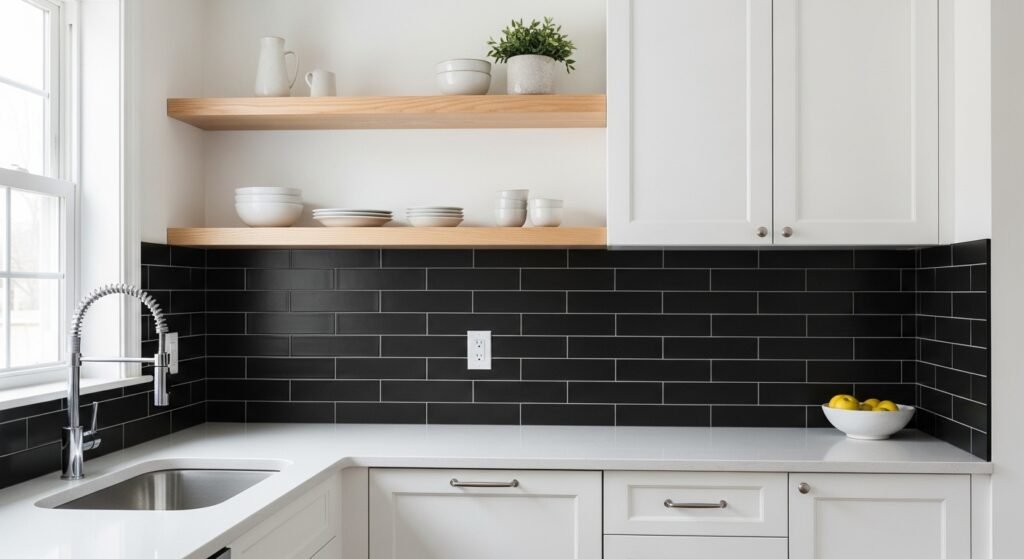
Should you wish to create depth without any commitment and cannot bring yourself to use dark cabinetry or dark-colored wall paint, consider the use of a dark backsplash. Use a dark tile, such as matte black subway tile, dark slate tile, or deep emerald-zellige tile for the wall behind the stove. Or go all out and create something strikingly beautiful with patterned cement tile in a dark color.
Utilizing backsplashes for this type of layering works particularly well in a small kitchen because they are naturally limited to a specific space and, therefore, draw attention to themselves without taking over the entire room. The contrast of the darker backsplash with the lighter surrounding design creates the visual relationship that makes small kitchens appear as if they are thoughtfully arranged.
Best Dark Color Choices for Small Rooms and Tiny Kitchens
In a small room, not all dark colors provide the same type of effect when used as paint colours. The various undertones associated with a specific paint colour can greatly impact whether a room feels warm, cool, or simply oppressive. Below are a few examples of dark hues to use in a small room/tiny kitchen:
Charcoal Grey: This is a versatile & sophisticated colour that can be used with nearly every material (e.g., wood, marble, stainless steel, brass) & also has the ability to blend in as a modern or classic piece.
Forest or Sage Green: This paint colour allows you to bring the outdoors inside. A calming colour that is organic in nature. It looks amazing next to warm wood colours & brass décor. It is the current trend for tiny kitchen ideas.
Deep Navy Blue: This is a wonderful colour that has a nautical feel to it. It looks terrific next to white countertops & organic wood. It also looks beautiful in photographs.
Warm Black: A shade of warm black or off-black that has either a brown or green undertone will have a very rich appearance when used in kitchen cabinet paint.
Terracotta/Deep Rust: A rich earthy tone that would look wonderful in small kitchens that are designed in a bohemian or Mediterranean style.
Inky Teal: A hybrid of blue and green that feels both dramatic and fresh. Excellent for kitchen cabinets in a room with warm lighting.
Common Mistakes to Avoid When Using Dark Colors in Small Rooms
Too many dark elements in one room can create an overwhelming darker appeal. To provide balance, the room should incorporate lighter surfaces such as countertops, rugs, and ceilings to ground the darkness.
Measured Lighting – Layers of Lighting: Dark rooms require layers of lighting (Overhead, Task + Ambient) to create a warm, welcoming atmosphere instead of a cold, gloomy one.
Dark Paint Color – Bad Undertone: Always test paint samples against the walls.
Leave Out Trim + Ceiling: The use of white or cream for trim, as well as for the ceiling, provides a frame for dark walls, thereby helping to prevent the room from feeling enclosed.
Don’t Forget — Reflective Surfaces: Mirrors, glass cabinet fronts, glossy tiles, and metallic fixtures provide extra reflective surfaces to reflect light back into a dark room.
Styling Tips to Make Dark Colors Work Harder in a Small Room
Incorporation of natural materials into your design scheme is a great idea! Materials like raw wood tones (e.g., cutting boards, floating shelves, bar stools and woven baskets) provide contrast to dark paint and add warmth to your overall aesthetic.
Use greenery as a means of injecting liveliness and texture into your space. Greenery will provide a striking contrast to the darkness of the walls.
Textiles are an excellent way to break up the substantial appearance of a dark surface. Textiles such as a linen runner, woven place mats and a smaller rug in your kitchen in front of the sink are awesome sources of soft visual texture.
Open shelving can also serve as an intentional display opportunity within a small kitchen with dark painted walls. Use open shelving to organize your collection of ceramics/glassware or some of your favourite cookbooks.
Creating reflections by using mirrors is a great way to create a lighter, more open space. Use mirrors strategically (e.g., on the wall next to your sink) to help reflect light into the room and create the illusion of an increased visual footprint in a small space.
Final Verdict: Should You Go Dark?
The answer, for most small rooms and especially for those hunting for fresh tiny kitchen ideas, is a confident yes — with intention. Dark colors do not shrink a space; they transform it. They replace the anxiety of “this room is too small” with the comfort of “this room was designed to feel exactly like this.” A jewel-box kitchen, a moody reading corner, a dramatic entryway — all of these can exist in the smallest square footage when you have the courage to go dark.
The key is pairing the dark palette with thoughtful lighting, contrasting lighter elements, natural textures, and a careful choice of shade. When you get those elements right, a tiny room stops being a problem to solve and becomes one of the most memorable spaces in your entire home.
So the next time you are staring at a small kitchen and wondering what to do with it — consider putting down the white paint and reaching for the forest green, the navy, or the charcoal. You might never look back.