Most people only consider how much space can fit across a room when they have a limited amount of floor space. However, one of the most intelligent ways to create an elegant, larger, and more functional home is by maximizing all of the vertical space in that room.
By learning how to adequately utilize vertical height in all spaces, you can change the way that room functions and how it feels. Whether you live in a condo, house, studio, dorm, etc., vertical space can create hidden storage, decorative, or organizational opportunities.
Usually when a room feels cramped, it’s because the vertical space available isn’t being utilized appropriately. Walls that are empty; corners that are unused; the space above a doorway; and even to the ceiling can be transformed into usable space with shelving, hanging storage or decorative elements. When designed well, a vertical design can make a room feel taller, more open, and brighter without having to undergo any type of major renovations to that room.
Throughout this guide, you will discover many effective and simple ways to utilize the vertical heights of your walls in your living room, bedroom, kitchen, bathroom, office, or entryway. Homeowners and renters alike can benefit from these ideas while reducing clutter and improving the overall look of their room.
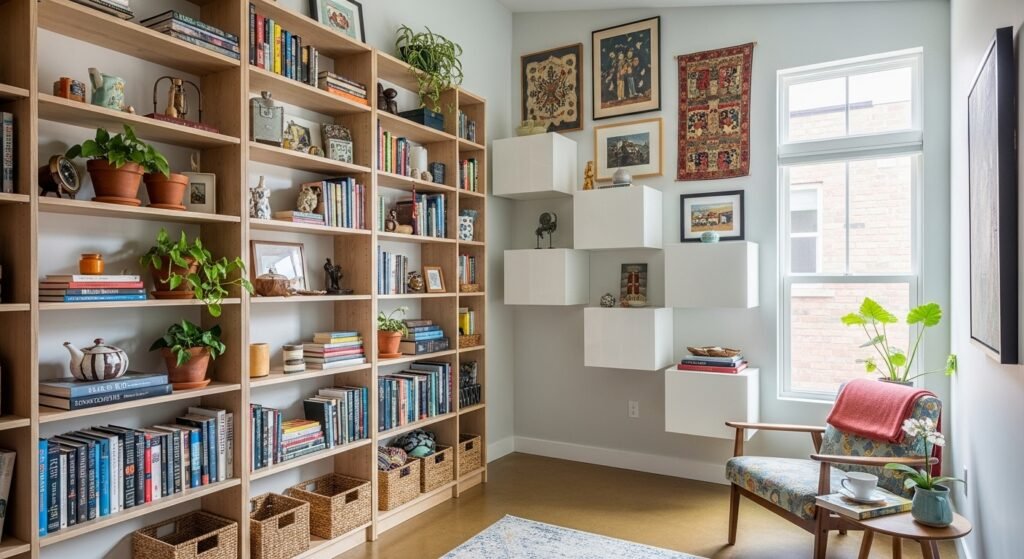
Why Vertical Space Matters in Interior Design
Vertical space is often underappreciated in decorating a home; nonetheless, it plays an essential part in how a particular area will work. Not only does maximizing the use of vertical space help to lessen the stress caused by an overloaded floor area, it also creates additional walking areas and provides more effective organisation of belongings, allowing for a less crowded feeling about the room.
Additionally, arranging your space effectively will help create the illusion of higher ceilings. For small-sized rooms in which visual aids will be the most helpful, tall shelving, appropriate curtain spacing from the ceiling, and upward lines on all furniture and decorative items will help draw the eyes upward creating the illusion of a larger area than it actually is.
Lastly, vertical space offers additional options for effective storage. Floor cabinets, baskets and such are all great for providing additional storage space; however, they take away valuable square footage. Wall-mounted shelving, wall-mount hanging racks, multi-stacked shelves, and tall storage cabinets provide convenience while not consuming the use of floor space.
More importantly, storing items in a vertical manner helps promote order and cleanliness. When a room incorporates the full height of the walls, it will generally appear to be better designed, more fashionable, and easier to maintain cleanliness.
Start by Looking at Your Walls Differently
The first step in learning how to maximize vertical space in any room is changing how you look at your walls. Instead of seeing them as empty surfaces for a few frames or one mirror, think of them as working zones.
Walls can hold:
- Floating shelves
- Tall bookcases
- Hooks and pegboards
- Mounted cabinets
- Hanging plants
- Vertical organizers
- Fold-down desks or tables
- Decorative storage baskets
Narrow walls can be functional. A thin shelf between furniture, a rail system in kitchens or a wall mount organizer close to an entry point will provide additional storage without hindering traffic patterns.
Before adding anything, be sure to examine your space. Identify underused walls and look above furniture, above doorways, around windows and in corners. These locations work well for vertical design.
Use Tall Furniture Instead of Wide Furniture
An excellent way to save space is by using tall pieces of furniture. Wide cabinets and low storage units take up too much floor space; tall furniture gives you additional storage room but does not expand the footprint of the space.
Tall bookshelves can hold books, storage baskets, decorative accessories, file storage, and other decorative items such as plants in a single vertically designed piece of furniture. Tall wardrobes have a greater capacity to hold items than shorter dressers. Tall pantry cabinets will save floor space compared to multiple shorter kitchen cabinets since they utilize vertical space (the height of the wall).
Tall furniture is especially useful in:
- Small bedrooms
- Home offices
- Studio apartments
- Entryways
- Dining corners
However, balance is important. If every piece in the room is very tall, the room may feel heavy. Mix tall furniture with some open space so the room still feels airy. Also, choose pieces that suit the room’s width and height. A narrow tall cabinet often works better than a bulky one.
When possible, pick furniture that goes close to the ceiling. The unused gap above short cabinets often becomes a dust-collecting area instead of a useful storage zone.
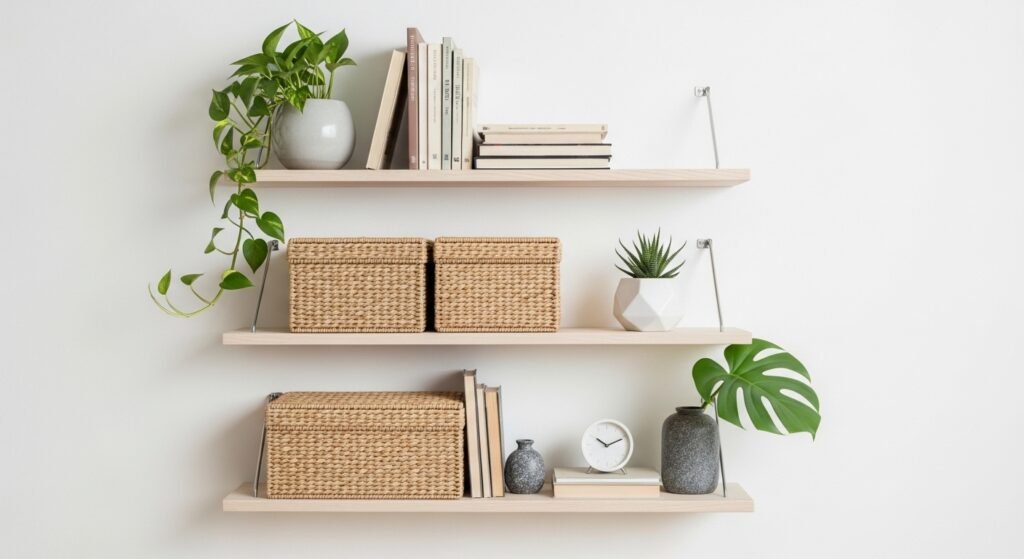
Install Floating Shelves for Flexible Storage
Floating shelves are a fantastic way to organize vertically because they are organized easily, look good, as well as flexible.
You can put floating shelves typically anywhere within the home, but they can also be arranged depending on your individual use.
Examples of how to utilize floating shelves throughout your home include:
- Living Room: Books, candles, art, and family photos
- Kitchen: (spices, jars, mugs, or small plants)
- Bathroom: Skincare, towels, or toilet paper
- Bedroom: Nightstands can be replaced by using floating shelves to display personal items, etc.
The main rule for installing floating shelves is that it’s better to set more than one shelf vertically (instead of setting only one shelf at eye level). When setting more than one floating shelf, it draws the eye upward and uses more of the available wall height.
Try these shelf ideas:
- Stacked shelves above a desk
- Corner shelves in empty wall corners
- Shelves above a bed or sofa
- Shelves above door frames
- Narrow shelves in hallways
- Open shelves above kitchen counters
To keep floating shelves attractive, avoid overcrowding them. A mix of practical items and decorative pieces works best. Storage baskets can also help keep small items neat.
Make Use of the Space Above Doors and Windows
The space above doors and windows is so commonly left unused but actually provides great opportunity for storage and/or visual design. One option is to use a shelf just above the top of a door to hold anything from books or baskets to decorative accents. ADDITIONAL TIP: a shelf above a door in a small room provides a place to add more storage where there may not be another option.
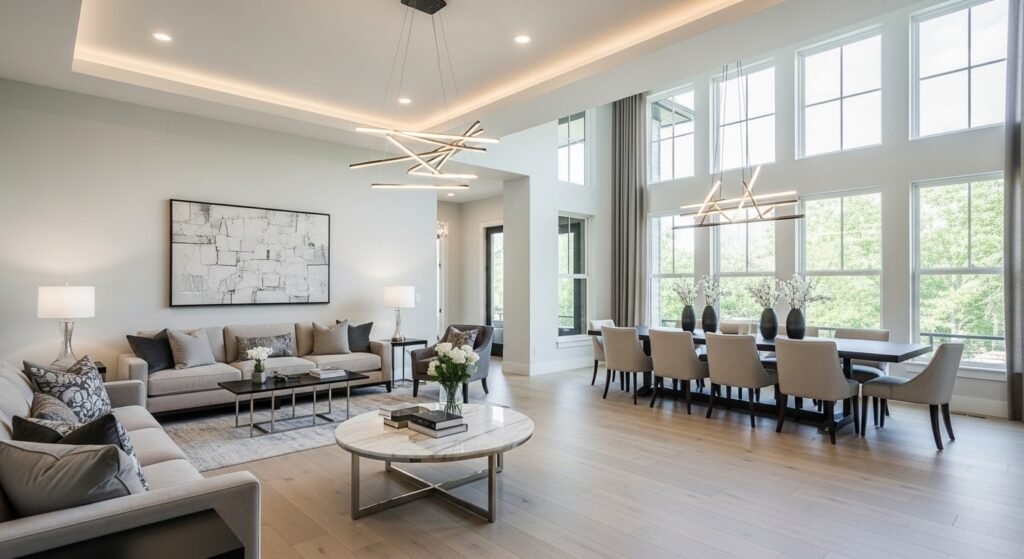
Narrowing window treatments by mounting the curtain rod higher on the wall, closer to the ceiling, creates an illusion of taller walls. In addition to being a clever design trick, it also helps enhance the vertical emphasis of the room. By hanging long curtains, a room appears to be larger and more elegant.
Use the space around the windows for things like narrow shelves, hanging planters or wall mounted lights. Just be careful that the arrangement does not obstruct natural light or create a cluttered feel.
These areas can be very useful for temporary storage in small homes. Items like seasonal decorations or linens and boxes used infrequently may be best stored above overhead doors.
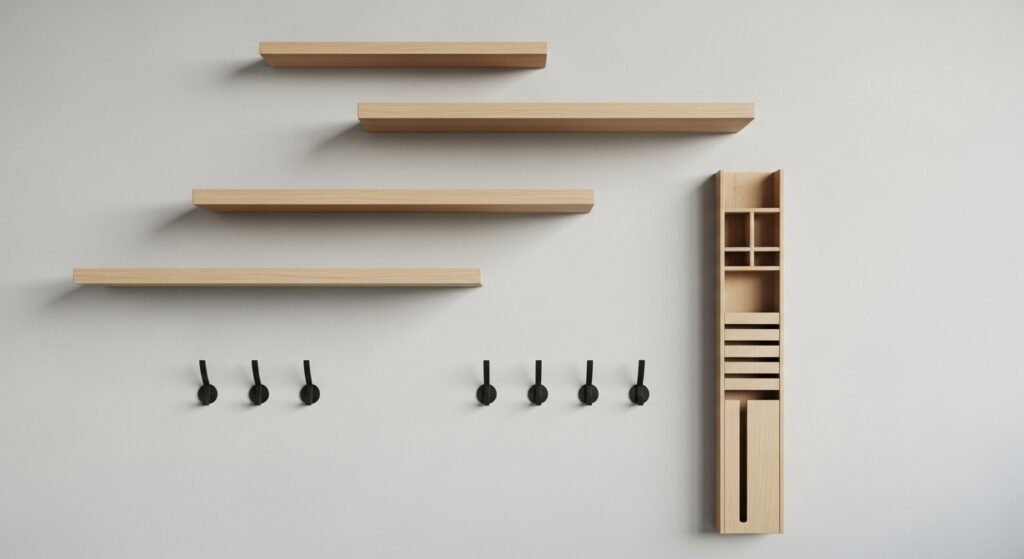
Add Hooks, Pegboards, and Wall Rails
When it comes to vertical storage, it doesn’t always have to be in the form of shelving or cupboards. You can use hooks, pegboards and wall rails for lightweight, and very effective vertical storage in places that have no room for shelving.
Hooks are also great for hanging in every area of your home, whether it be an entry way, bathroom or kitchen, or a bedroom. The use of hooks is for coats, bags, towels, hats, scarves and other accessories. You can use pegboards in home offices, craft rooms, kitchens, or utility rooms because they allow you to change the configuration depending upon your needs.
Wall rails can hold:
- Kitchen utensils
- Cups and mugs
- Bathroom baskets
- Office supplies
- Cleaning tools
- Small decorative planters
These systems are especially useful because they keep items visible and easy to reach. They also reduce drawer clutter and make everyday tasks more convenient.
If you want a cleaner look, choose matching hardware and keep the layout organized. If you prefer a more creative style, pegboards can become both functional and decorative.
Think Vertically in the Bedroom
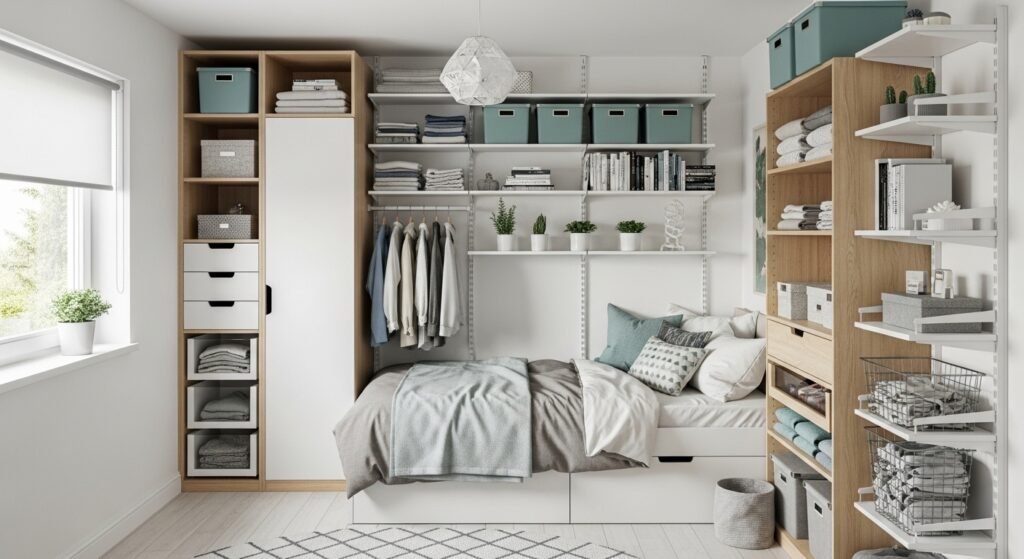
Due to a lack of storage and large pieces of furniture, it is very common that a bedroom will get cluttered. By utilizing vertical solutions in a bedroom, you can create a more tranquil environment.
Consider your bed as a starting point – typically, most beds will have a wall above their headboard. This area can be utilized through the installation of shelving, mounted cabinets, or art arranged vertically. Assess your current wardrobe; if you have space to add a new taller unit, that may be a better option. If not then consider purchasing some sort of organizer for the inside of your existing wardrobe so that you can take advantage of all available storage space.
Other smart bedroom ideas include:
- Wall-mounted bedside shelves instead of side tables
- Over-the-door organizers
- Hooks behind the door
- Tall dressers instead of wide ones
- Shelf towers in unused corners
- Under-bed storage combined with vertical closet organizers
In children’s rooms, vertical storage is even more useful. Wall bins, book ledges, hanging toy organizers, and tall shelving units can keep the floor open for play while still keeping the room tidy.
Use Vertical Space Smartly in the Kitchen
The kitchen is an excellent place to increase storage options by maximizing space, especially on its vertical surfaces. The majority of kitchens run out of cabinet storage space very fast, but there is significantly more space above the countertops and walls that would otherwise be wasted.
You may use open shelving above your countertops to store dishes, jars and other kitchen essentials. You can use wall rails to put all your utensils, towels, and mugs on them for added storage space! You can use magnetic strips to put your metal utensils and tools (such as knives) on, or use hooks hung from a shelf to add a place to hang your cups. If your cabinets do not reach to the ceiling, you can use the space above them for baskets or decorative containers.
You can also add:
- Tall pantry cabinets
- Shelf risers inside cabinets
- Hanging fruit baskets
- Vertical tray dividers
- Mounted spice racks
- Over-the-sink shelving
The trick is to keep daily-use items within easy reach and place rarely used items higher up. This makes the kitchen both practical and visually organized.
A kitchen that uses vertical space well often feels bigger, more open, and more efficient, even when the actual size is small.
Do Not Ignore Bathroom Walls
Bathrooms are usually among the smallest rooms in a home, which means vertical space becomes even more valuable. Instead of relying only on under-sink storage, use the wall area above the toilet, beside the mirror, and near the shower.
Good bathroom vertical storage ideas include:
- Shelves above the toilet
- Wall-mounted cabinets
- Hanging towel racks
- Corner shelves
- Over-the-door storage hooks
- Narrow ladder shelves
- Mounted baskets for toiletries
Because bathrooms contain moisture, it is important to choose materials that can handle humidity. Metal, treated wood, glass, or moisture-resistant engineered materials often work best.
Keep the arrangement simple and uncluttered. Bathrooms feel more relaxing when storage is neat and essentials are easy to access.
Create Visual Height with Design Tricks
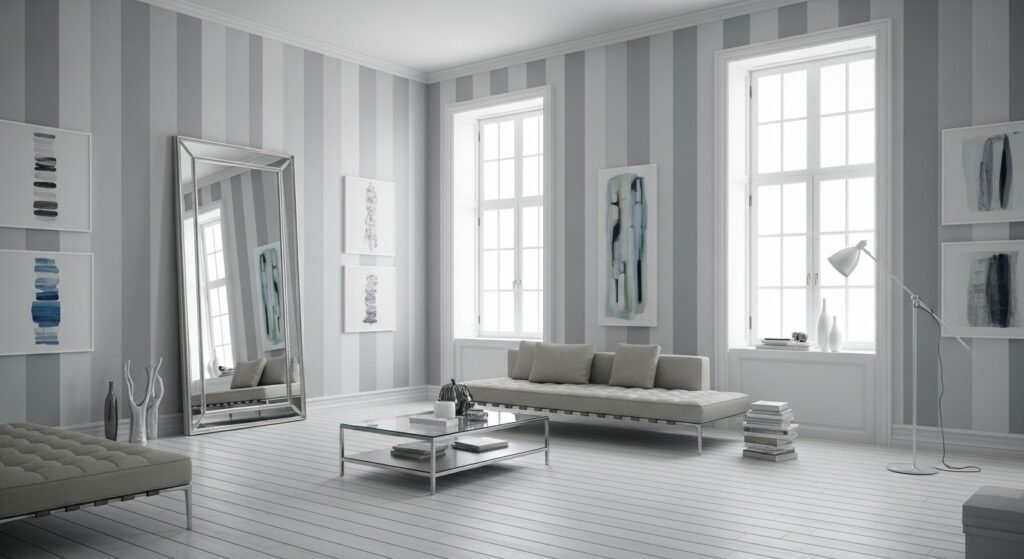
Maximizing vertical space is not only about storage. It is also about visual design. Even if you cannot add major shelving or furniture, you can still make a room feel taller and more open with simple styling choices.
Some effective visual tricks include:
- Hanging curtains near the ceiling
- Using vertical striped patterns
- Choosing tall mirrors
- Placing artwork in vertical groupings
- Using lighting that directs attention upward
- Adding tall plants
- Picking furniture with visible legs for a lighter look
Tall mirrors are especially helpful because they reflect light and stretch the appearance of the room. Vertical art arrangements can also turn a plain wall into a height-enhancing feature.
When combined with real vertical storage, these design tricks create a room that feels spacious, balanced, and polished.
Use Corners and Narrow Gaps
Corners and narrow gaps are often wasted, but they can be very useful when thinking vertically. A slim shelf in a corner, a narrow rolling unit beside a cabinet, or a tall corner bookcase can turn awkward areas into valuable storage spots.
Here are a few good examples:
- Corner floating shelves in living rooms
- Tall corner cabinets in bathrooms
- Slim racks between appliances
- Narrow shelves beside wardrobes
- Vertical plant stands in empty corners
These small additions may seem minor, but they can make a noticeable difference in rooms where storage is limited.
Keep It Functional, Not Overcrowded
The corner and narrow spaces are often overlooked when thinking vertically as they can also be used well if you look at them from a vertical viewpoint. By installing a slim shelf in the corner, creating a narrow rolling unit next to a cabinet or utilizing a tall corner bookshelf, you will create an area that is otherwise unused into a functional storage area.
When using vertical elements, remember these simple rules:
- Leave some blank wall space
- Do not stack items too tightly
- Choose storage pieces that match the room style
- Use baskets or containers to reduce visual clutter
- Keep heavier items lower for safety
- Place frequently used items where they are easy to reach
A clean vertical layout should support everyday living. If it looks good but is hard to use, it will not work long term.
Best Rooms to Apply Vertical Space Ideas First
If you want quick results, start with the rooms where clutter builds up fastest. These are usually:
Bedroom
Great for shelves, tall wardrobes, and wall hooks.
Kitchen
Perfect for rails, open shelving, and tall pantry storage.
Bathroom
Ideal for over-toilet shelves and mounted organizers.
Home Office
Excellent for pegboards, shelves above desks, and vertical filing systems.
Entryway
Best for hooks, shoe shelves, and wall-mounted baskets.
Once you see how much difference vertical storage makes in one room, it becomes easier to apply the same strategy throughout your home.
Common Mistakes to Avoid
In an attempt to utilize vertical space to its fullest potential in a room, there are several common mistakes that people tend to make. Oftentimes these mistakes will actually take away from the overall benefit of using vertical space.
People frequently make the mistake of putting their items too high up. Having upper storage space available is beneficial but daily-use items need to be within reach of the user, meaning they will be lower rather than higher.
Another mistake people make is to select bulky wall units that create a cramped feeling in the room. Light, open, and slender storage items are typically much better to select.
People also tend to overlook the importance of proportion. A very large shelf in a very small room can create an intimidating feeling for the user while too many decorative pieces combined will cause clutter and defeat the overall goal of being organized.
The best way to create a space using vertical storage is to consider functionality, safety, and appearance. Determine what items you need to have stored, how frequently you use them, and how you would like the room to feel.
Final Thoughts on How to Maximize Vertical Space in Any Room
Maximizing vertical space in any room will provide a practical way to enhance your home while staying within the original footprint of your home. By utilizing walls, corners, tall furniture, floating shelves, and creative designs, you can achieve more storage, improved flow, and greater display possibilities in almost any room.
The most exciting part about vertical design is that it can work for virtually every budget. Some solutions can be completed using only a couple of hooks or one floating shelf; while others may be tall cabinets or custom built-in storage. Regardless of the solution you choose, the goal remains the same; use as much of the height of the room as you do with the floor.
If your space feels cramped or crowded; you really do not need to add square footage; perhaps you need to think of it differently. Rather than thinking horizontally or at the floor level; think vertically; look at what is already there; and turn unused wall space into an attractive and functional space.
Conclusion
Comfortable and well-arranged rooms do not necessarily need to be large. Often, you can solve decorating problems involving smaller spaces utilizing your vertical space smarter. There are several easy methods to use your vertical space, from floating shelves and tall cabinets, to hooks, rods and visual height illusions.
No matter if you want to organize a small bedroom, create an open space for a narrow bathroom, or improve your small kitchen’s efficiency, utilizing vertical storage will help you optimize the space you already have. Start small, remain consistent, and select solutions that compliment your lifestyle. With simple adjustments like this over time, you can completely revamp the appearance and functionality of your living environment.
Read More:
How to Decorate a Small Living Room on a Budget (Full Guide)
Best Bedroom Color Combinations for Better Sleep (Backed by Psychology)