Pipe Cleaner Flowers Bouquet Ideas: 15 Cute Arrangements You Can Make Today
Fresh flowers are nice, but they wilt, they cost more than you expect, and they always seem to droop right before you need them. Pipe cleaner flowers bouquets solve all of that. They’re cheap, quick, kid-friendly, and they don’t need water (or sunlight, or luck).
This list gives you 15 bouquet ideas that look good in a jar, wrap well for gifting, and work for beginners. It’s perfect for classrooms, party decor, rainy-day projects, and handmade gifts that won’t die on the ride home. You’ll also get a few simple tips so your bouquet feels sturdy and polished, not floppy and messy.
Before You Start, Gather These Supplies for Stronger Bouquets
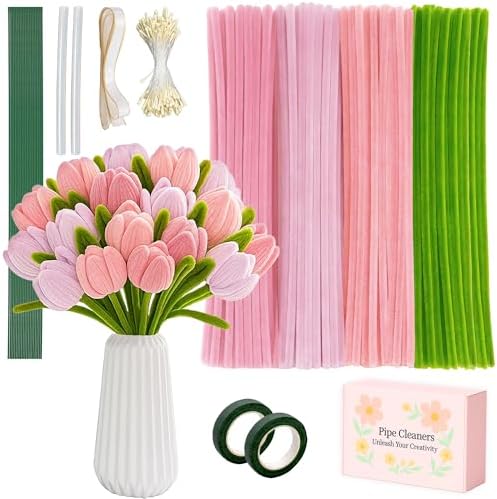
A pipe cleaner bouquet can be simple, but the right basics help it hold its shape and look more “finished.” Most flowers use 2 to 6 pipe cleaners per bloom, depending on how full the petals are and whether you add leaves.
Here’s a solid starter kit:
- Pipe cleaners in a few colors (plus green for stems and leaves)
- Scissors (kid-safe scissors if children are helping)
- Wire cutters (helpful for trimming stems or sharp ends)
- Floral tape (green is the classic choice)
- Ribbon or twine (for a handle wrap or bow)
- Small vase, jar, or cup (to test your height as you build)
- Glue dots (optional, for holding centers or bows in place)
Quick safety note: pipe cleaners have wire inside. If you cut them, the ends can get poky. Twist cut ends inward, cover them with floral tape, or trim them shorter. If kids are making these, adult help with cutting makes everything smoother.


Easy tricks that make pipe cleaner flowers look more real
A pipe cleaner flower looks “toy-like” when every petal sits at the same angle. Small tweaks add life fast.
- Twist a tight center first so the petals don’t slide around later.
- Fluff and bend petals after you shape them, think of cupping a real petal.
- Mix two colors in one petal (twist two pipe cleaners together) for soft shading.
- Add leaves (even one or two) so the bouquet reads as “real flowers.”
- Wrap stems with floral tape to hide twists and make a clean, gift-ready handle.
- Angle stems slightly so the bouquet isn’t a straight-up cylinder.
How to pick a color palette that looks good in a vase
If you’ve ever made a bouquet that felt “loud,” it was probably a color problem, not a skill problem. A simple rule that works: two main colors plus one accent, then add green to calm it down.
A few easy palettes:
- Pastels: blush pink, lavender, butter yellow, mint green
- Bright rainbow: pick 5 to 7 bold colors, then repeat each at least twice
- Monochrome: all pinks (light to dark) with green leaves
- Earthy tones: rust, mustard, cream, olive
Match your theme when it helps: red and pink for Valentine’s Day, soft mixes for spring, school colors for graduation, or bright primaries for birthday centerpieces.
15 Pipe Cleaner Flowers Bouquet Ideas (With the Best Use for Each)
Each idea below includes what it looks like, suggested colors, difficulty, and a quick arranging tip. Mix and match freely. A “bouquet” can be five stems in a jar or a full armful with ribbon and wrap.
Simple, beginner friendly bouquets you can make fast
Daisy and greenery bundle
A cheerful bunch of white daisies with yellow centers, plus a few green loops as leaves. Colors: white, yellow, green. Difficulty: easy. Bouquet tip: keep daisies at two heights for a casual look. Great as a teacher gift.
Tulip bunch (solid colors)
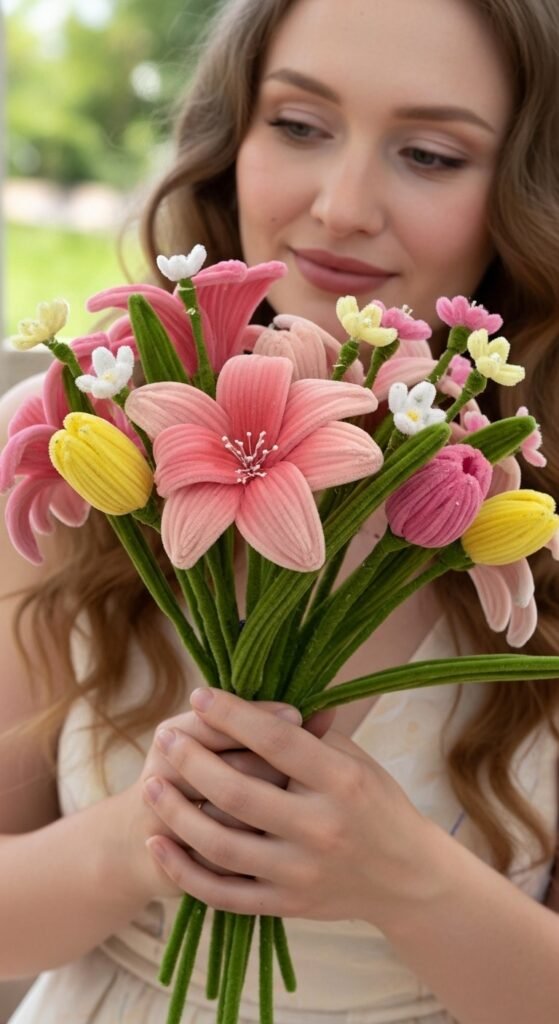
Smooth, cup-shaped tulips that look clean and modern. Colors: pink, red, yellow, or purple, plus green. Difficulty: easy. Bouquet tip: wrap stems tightly so tulips stand upright. Perfect for desk decor.
Classic rosebud posy
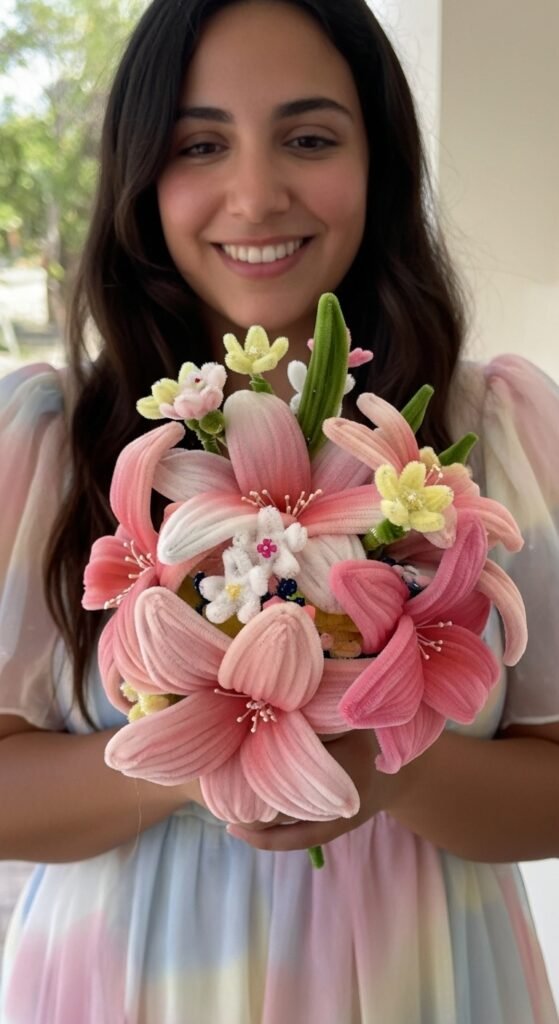
Small rosebuds with rolled petals, grouped like a neat posy. Colors: red, blush, cream, green. Difficulty: medium. Bouquet tip: make one rose slightly taller as the focal. Nice for a “get well soon” jar.
Mini wildflower mix (tiny blooms)
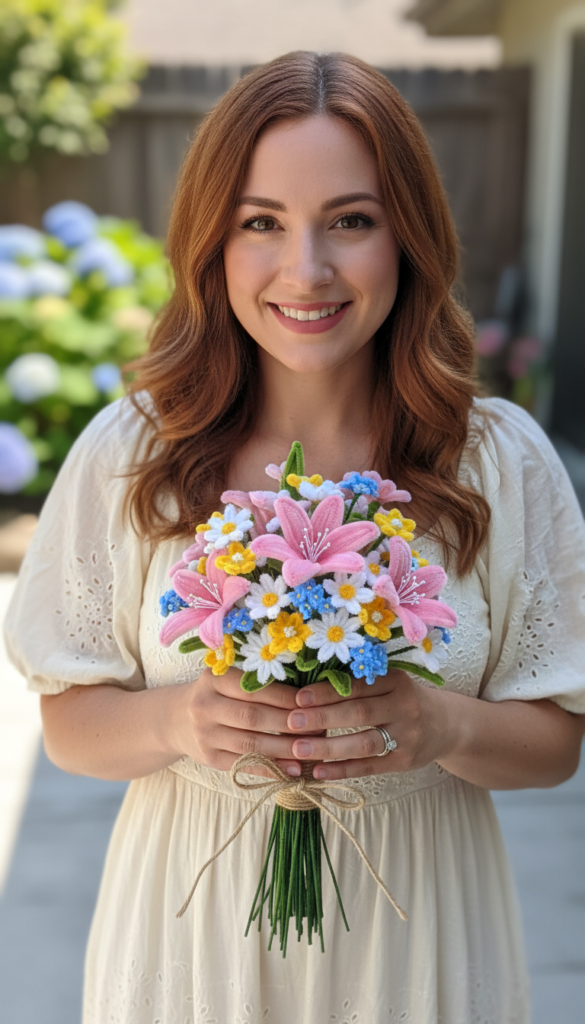
A mixed bunch of tiny five-petal flowers, like a meadow in your hand. Colors: blue, white, yellow, pink, green. Difficulty: easy. Bouquet tip: use odd numbers of each color, it looks more natural. Great for party place settings.
Sunflower and baby’s breath look
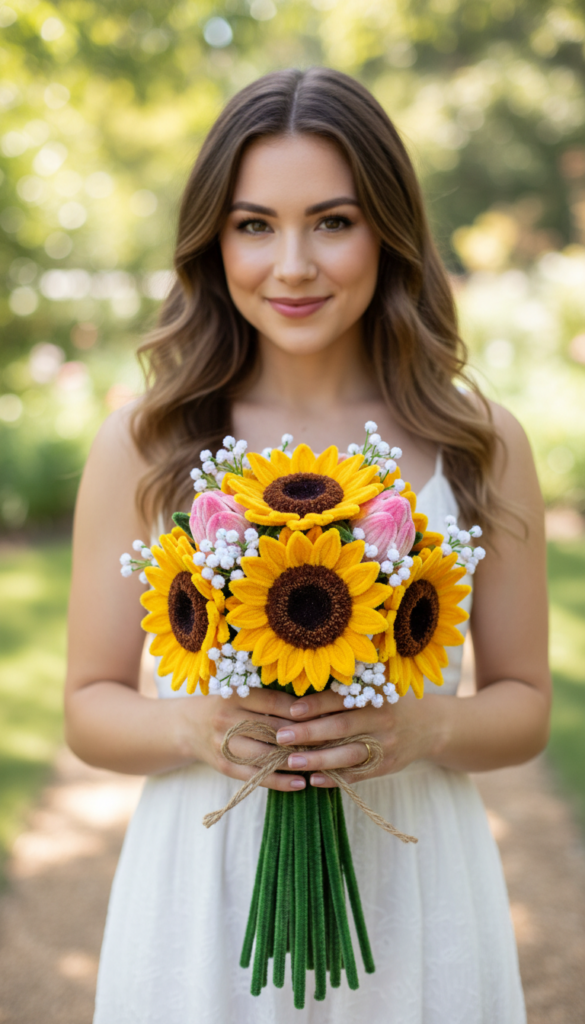
One or two bold sunflowers, plus clusters of tiny white dots as filler. Colors: yellow, brown, white, green. Difficulty: medium. Bouquet tip: place filler around the edges to soften the shape. Sweet for a kitchen counter.
Lavender sprig bouquet
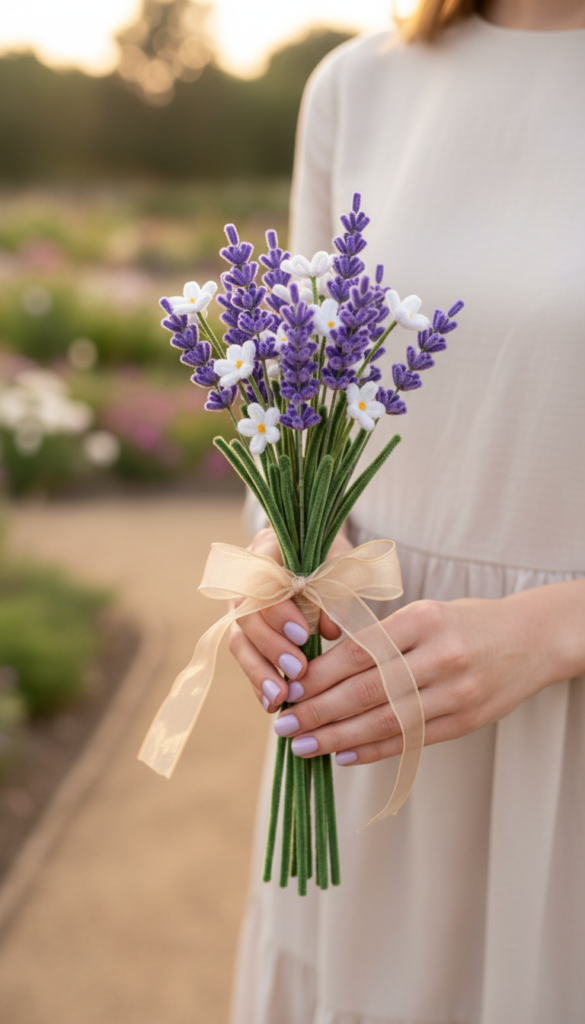
Tall purple sprigs with small loops stacked up the stem. Colors: lavender, deep purple, green. Difficulty: easy. Bouquet tip: keep stems tall and slender, don’t over-pack them. Great as a calming bedside bunch.
Bold and themed bouquets that make great gifts
Rainbow swirl bouquet
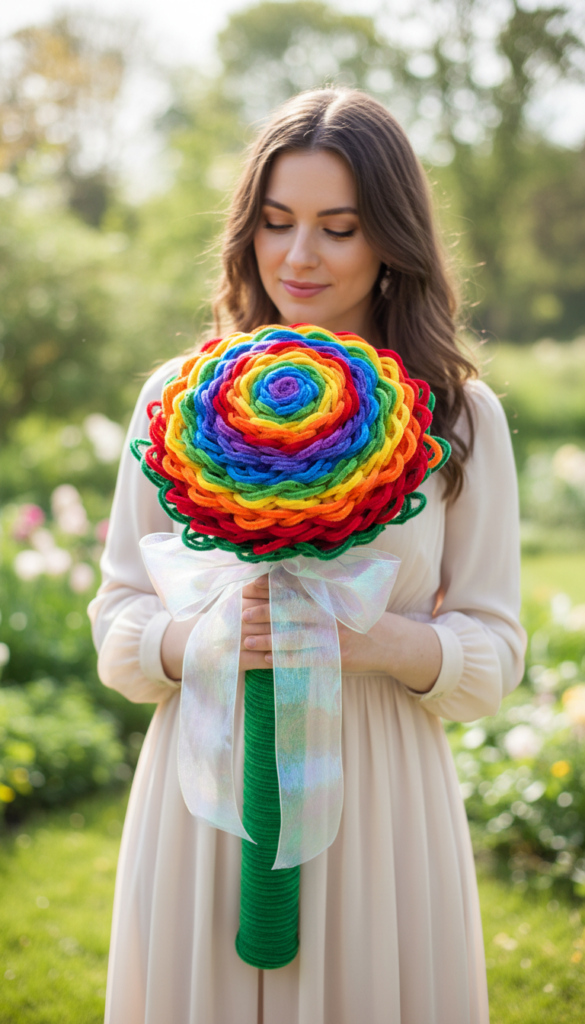
Spiral petals made from twisted multicolor pipe cleaners, like little pinwheels. Colors: rainbow mix with green stems. Difficulty: medium. Bouquet tip: repeat each color at least twice so it feels planned. Fun for a “just because” gift.
Candy-colored birthday bouquet with bow
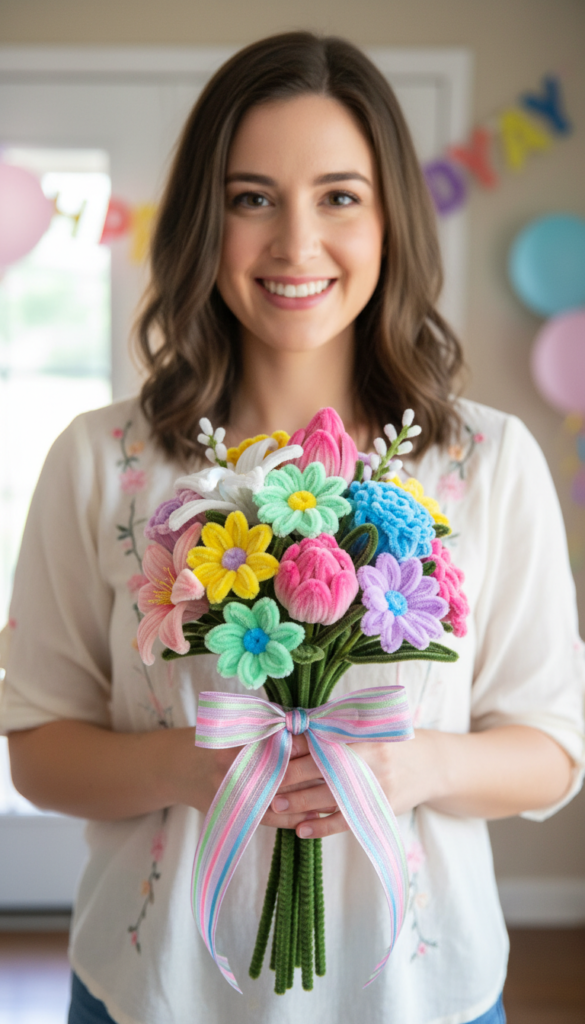
Round blooms in bubblegum colors, finished with a big ribbon bow. Colors: hot pink, teal, lime, yellow. Difficulty: easy. Bouquet tip: add one tall “candle” stem (a straight pipe cleaner with a tiny flame shape). Add a gift tag to the ribbon.
Valentine’s red and pink rose mix
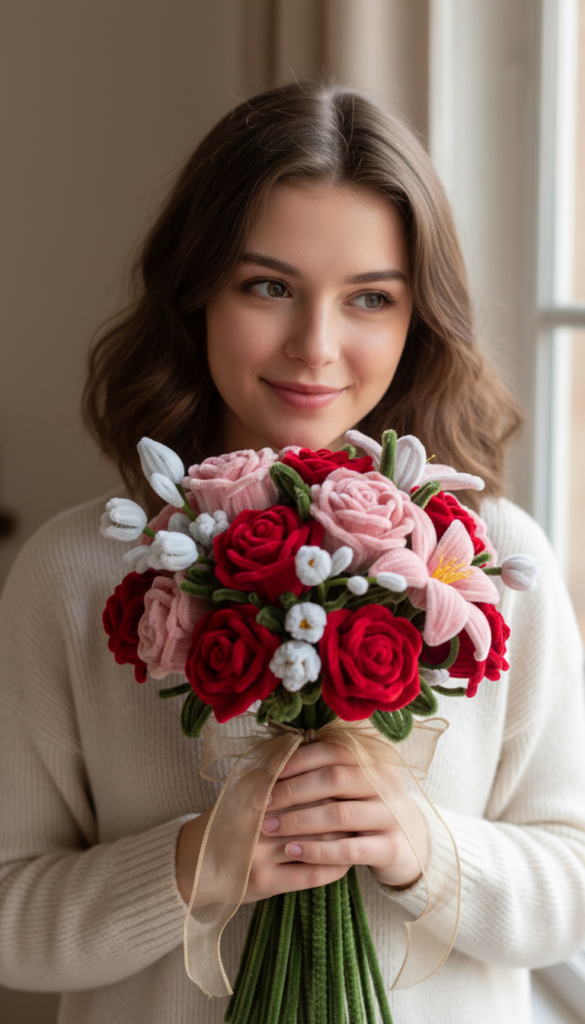
A tight bunch of roses with a few heart-shaped leaves tucked in. Colors: red, pink, white accents, green. Difficulty: medium. Bouquet tip: keep it compact, then wrap in a paper cone for a real bouquet feel. Add a small card pick.
Graduation bouquet in school colors

Simple flowers (daisies or tulips) in two school colors, plus a matching ribbon. Colors: your school palette, plus green. Difficulty: easy. Bouquet tip: make the ribbon handle long enough to carry. A mini paper diploma tag makes it extra cute.
Fall bouquet with orange flowers and fuzzy berries
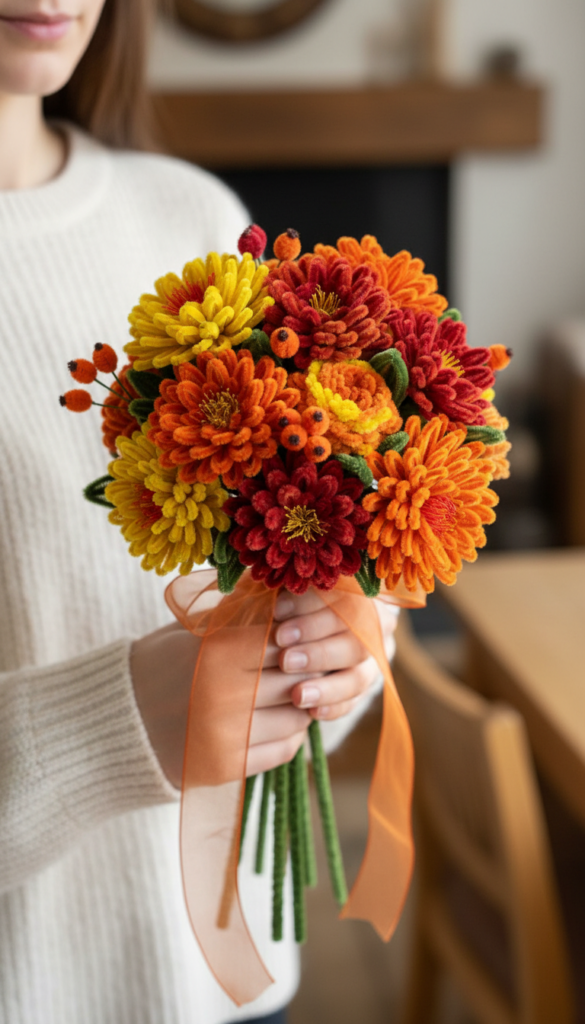
Warm blooms paired with little berry clusters (tight red or burgundy balls). Colors: orange, rust, cream, burgundy, green. Difficulty: medium. Bouquet tip: add a few brown “twig” stems for texture. Wrap with kraft paper for a cozy look.
Fancy looking bouquets for centerpieces and photos
Peony style fluffy bouquet
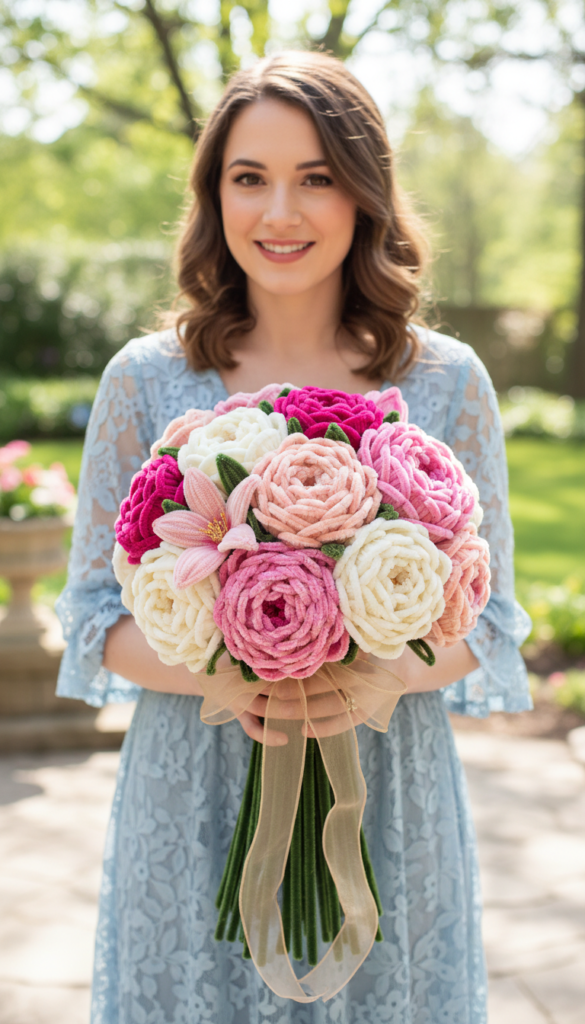
Big, ruffled blooms that look full from every angle. Colors: blush, white, coral, green. Difficulty: medium. Bouquet tip: mix two sizes of peonies, then tuck smaller buds between them.
Hydrangea ball bouquet (many small clusters)
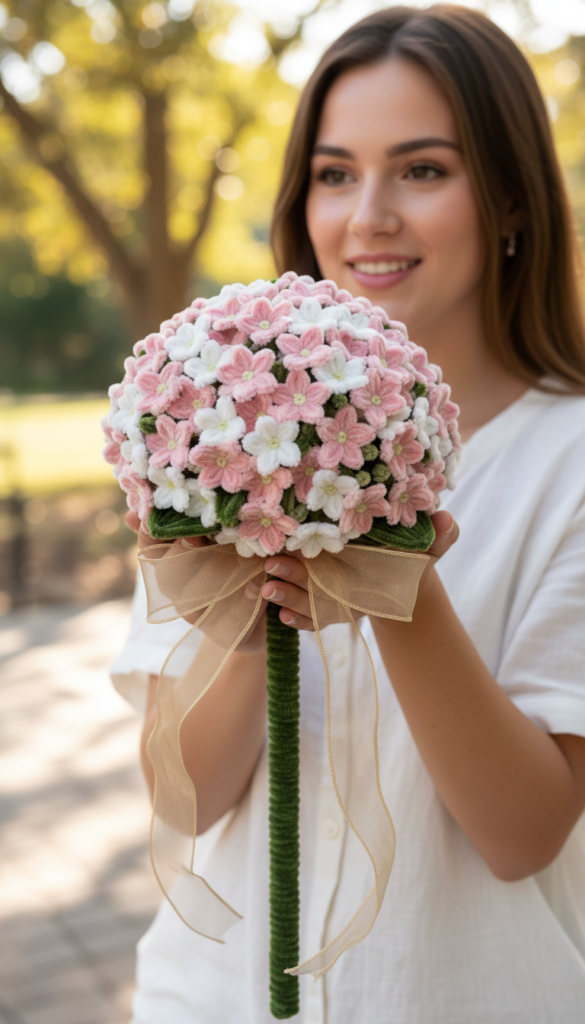
Lots of tiny blossoms grouped into round “cloud” heads. Colors: light blue, lilac, white, pale green. Difficulty: medium. Bouquet tip: build each hydrangea head around a tight center twist, then pack clusters close.
Lily inspired bouquet with long petals and stamens
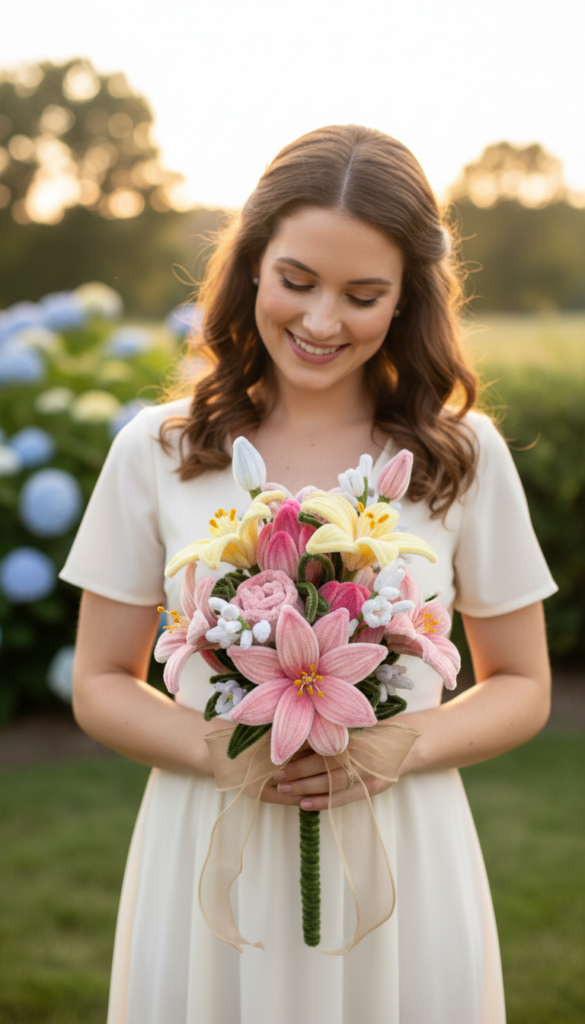
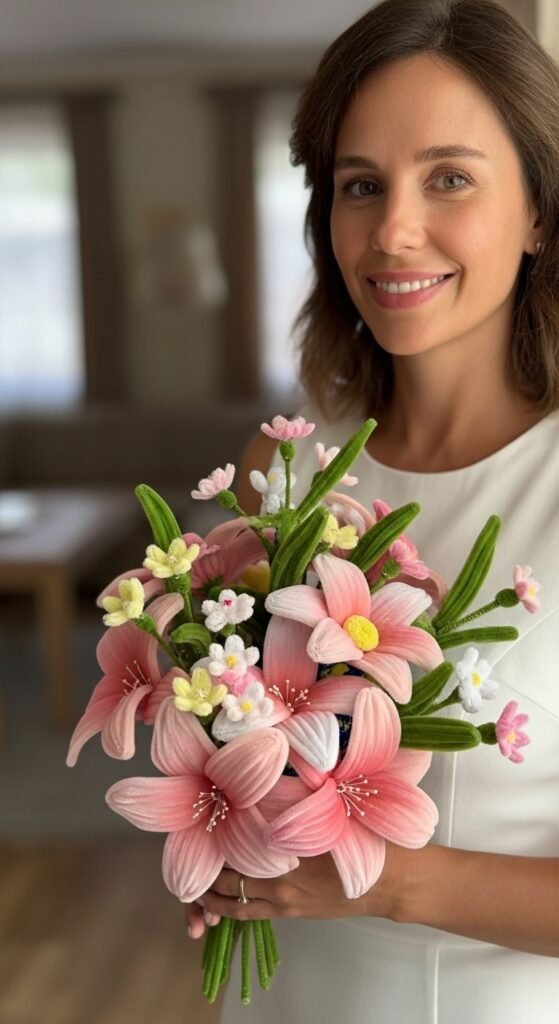
Long pointed petals with thin stamens in the center for that lily look. Colors: white with yellow, pink with orange, plus green. Difficulty: medium. Bouquet tip: angle lilies outward and keep stems taller than filler for drama.
Orchid inspired bouquet with curved petals
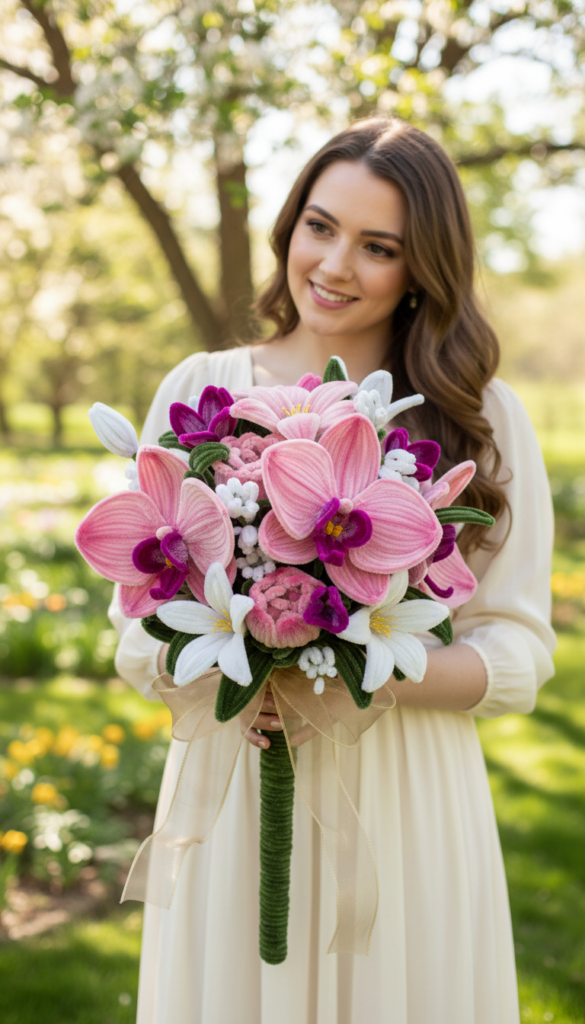
Curved petals that feel airy, with a bold center “lip” shape. Colors: purple, white, soft pink, green. Difficulty: medium. Bouquet tip: use fewer stems, but make each one detailed, then display in a slim vase.
Make Your Bouquet Hold Its Shape, Even If You Carry It Around
Pipe cleaner bouquets travel well when the stems are treated like one unit. Start by lining up stems, then twist or tape them together in two spots, one near the top and one near the base. This keeps flowers from spinning and turning sideways.
Balance matters too. Put heavier, larger blooms in the center, then lighter filler around the edges. If the bouquet keeps tilting, shorten a few stems and test it in your vase as you go. For a clean finish, wrap the handle with floral tape, then add ribbon. If you want the “gift shop” look, slide the bouquet into a paper cone wrap and tie it off with twine.
For display, a mason jar works, but a thrifted vase looks even better. You can also poke stems into floral foam inside a small pot to lock everything in place.
Quick fixes:
- Drooping petals: twist the base tighter, then bend petals upward with your fingers.
- Poky ends: trim, fold inward, and cover with floral tape.
- Loose centers: press in a glue dot and pinch for ten seconds.
How to size and arrange flowers like a real bouquet
Real bouquets aren’t perfectly even, and that’s why they look good. Use odd numbers when you can (3, 5, 7) and choose one main flower type as your “star.” Vary the heights by about one to two inches so everything doesn’t land in a flat line.
As you build, rotate the bouquet in your hand and keep checking the front, sides, and back. Place greenery around the edges like a frame. For a dome shape, keep the tallest blooms in the center and step down evenly. For a loose wildflower look, spread heights out and let a few stems lean.
Conclusion
A pipe cleaner bouquet is like a playlist, the same “notes” can feel calm, bright, or dramatic based on how you group them. Start with one of the easy options (daisies, tulips, or lavender), then try a themed gift bouquet next. Save your favorite ideas, make a few sets for quick presents, and snap a photo before you give it away. Small choices, like color palettes and simple leaves, are what make pipe cleaner flowers look polished.